

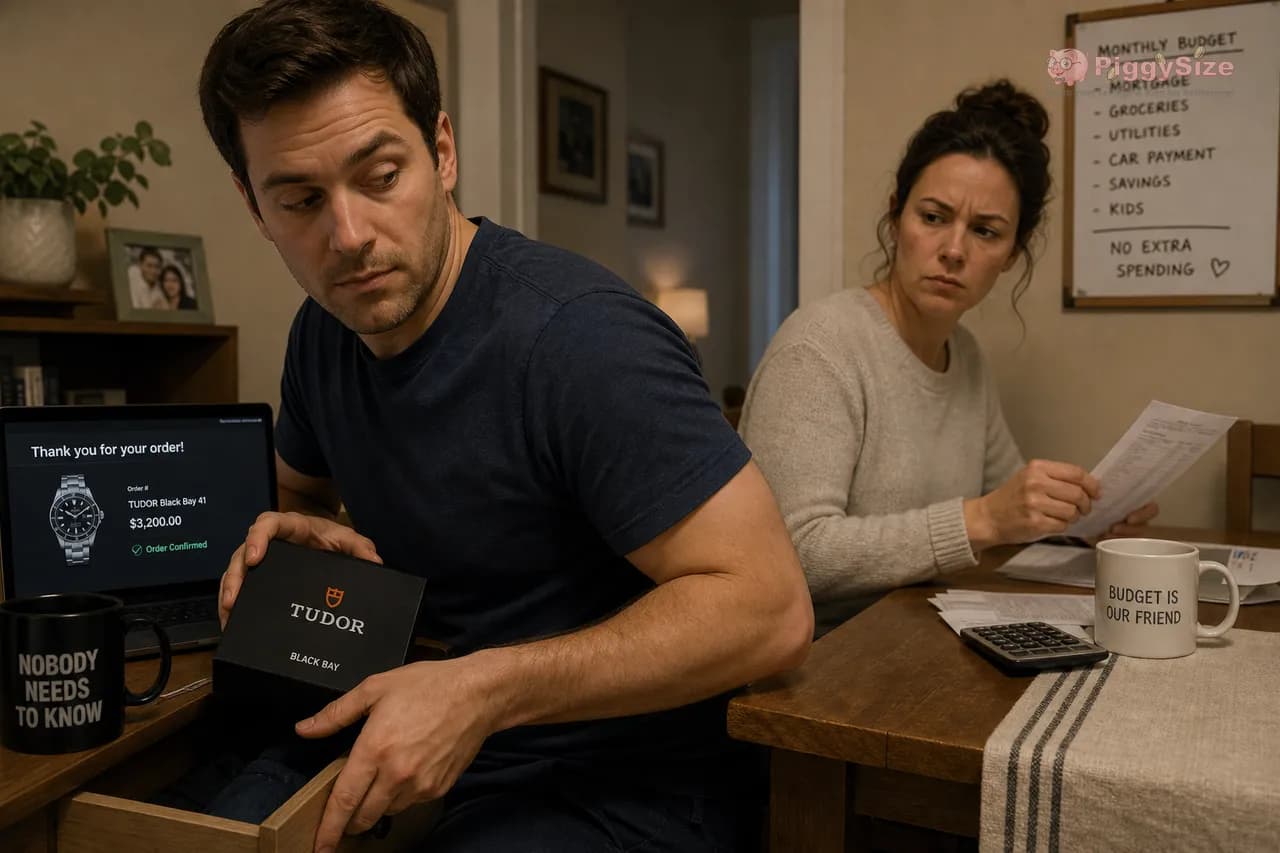
Financial infidelity is when one partner hides money-related facts from the other: a secret account, undisclosed debt, hidden spending, or a purchase they know their partner would not be okay with. It is common, it is corrosive to trust, and many people rate it as seriously as a physical affair.
The good news is that it thrives on secrecy, which means the fix is not complicated even if it is not always easy: shared visibility and regular, judgment-free money talks.
- It is about hiding, not the amount. A concealed $40 purchase can break trust as much as concealed debt.
- About 40% of committed Americans have kept a financial secret from their partner (Bankrate).
- Debt and spending top the list. Roughly 1 in 3 have spent more than a partner would approve of; about 1 in 4 have hidden debt.
- Many rank it near cheating. Around 45% say financial infidelity is at least as bad as physical infidelity.
- The antidote is transparency. When both partners can see the full picture, there is far less to hide.
What financial infidelity is (and is not)
Financial infidelity is defined by concealment, not by the dollar figure.
It usually looks like:
- A credit card or bank account the other partner does not know exists
- Debt kept hidden, or its true size understated
- Spending done quietly to avoid a conversation
- Lying about the price of a purchase or where money went
It is not the same as:
- Keeping separate accounts openly, by mutual agreement
- A private spending allowance both partners agreed to
- Planning a genuine surprise, like a gift or a trip
The line is simple: agreed-upon privacy is fine; hidden deception is not.
How common is it, really?
More common than most people assume. A Bankrate survey of Americans in committed relationships found:
- About 40% have kept a financial secret from their current partner.
- 1 in 3 (33%) have spent, or are spending, more than their partner would be okay with.
- 23% have hidden debt from their partner.
- 17% have kept a secret credit card, and 15% a secret savings account.
| Type of financial secret | Roughly how many admit it |
|---|---|
| Spending more than partner would approve | 1 in 3 |
| Hidden debt | About 1 in 4 |
| Secret credit card | About 1 in 6 |
| Secret savings account | About 1 in 7 |
These are self-reported, so the real numbers may be higher. People do not always admit to a secret, even anonymously.
Key point
Younger generations report keeping financial secrets at higher rates than older ones — in the Bankrate survey, about two-thirds of Gen Z in committed relationships reported financial infidelity, versus roughly a third of older generations. Marrying later with established, separate finances makes it easier for money to stay private, and easier for a small secret to go unnoticed.
Why people hide money
Financial infidelity is rarely about malice. The most common drivers are emotional:
- Shame. Embarrassment about debt, a low balance, or a spending habit.
- Avoiding conflict. Hiding a purchase feels easier than another money argument.
- Independence. Wanting a pocket of financial autonomy, especially after years single.
- Fear of judgment. Expecting a lecture rather than a conversation.
- Habit. Never having built a routine of talking openly about money.
Understanding the why matters, because it points to the fix. Most of these drivers shrink in a relationship where money is discussed without blame.
Why it does real damage
A hidden purchase seems minor. The harm is not the money; it is what the secret does to trust.
- Many equate it with cheating. About 45% of coupled Americans say financial infidelity is at least as bad as physical infidelity.
- It compounds. One hidden balance leads to hiding the payment, then the statement, then the next purchase.
- It links to bigger risk. Money conflict is one of the strongest predictors of divorce, and secrecy is a fast route from small disagreements to broken trust.
- Discovery hurts twice. The partner feels the financial hit and the deception, and the second one lingers.
Watch out
The most damaging pattern is not a single hidden purchase. It is a secret that grows because the partner keeps hiding the next thing to cover the last one. Early, honest disclosure almost always does less damage than the reveal that comes later.
The antidote is transparency, not surveillance
The opposite of financial infidelity is not monitoring your partner's every dollar. It is building a relationship where there is little reason and little room to hide. The research on couples keeps landing on the same protective factors: openness and shared visibility.
What that looks like:
- Both partners can see the full picture of accounts, bills, and debts, not just their own slice.
- Money talks happen regularly, so nothing has to build up in the dark.
- Conversations are judgment-free. Disclosing a mistake gets a plan, not a lecture.
- Personal spending is openly allowed, so there is no need to sneak.
Notice the last point. Transparency and autonomy are not opposites. A couple can agree that each person has personal spending money, and still keep the overall picture fully visible. Agreed freedom removes the main reason to hide.
Recovering from financial infidelity
If a secret is already out, the path back is well worn:
- Full disclosure. Everything on the table: accounts, balances, debts. A partial reveal restarts the cycle.
- Understand the why. Was it shame, fear, avoidance? The reason shapes the fix.
- Rebuild with visibility. Move to a setup where both partners can see the finances, so trust is verified, not just promised.
- Make money talks routine. Regular check-ins keep small issues from turning back into secrets.
Many couples come through financial infidelity stronger, precisely because it forces the transparency the relationship was missing. This is general information, not a substitute for counseling where trust has been badly damaged.
A worked example (illustrative only)
One partner has quietly carried a credit card balance for a year, hiding it out of embarrassment. The turning point is not a dramatic confession, it is a system change:
- They disclose the full balance and how it built up.
- They set up shared visibility so both can see all accounts and debts going forward.
- They agree on a personal spending amount each, openly, so neither feels the need to sneak.
The debt still has to be paid down, but the secret is gone, and with it the biggest threat to trust. This is an illustration, not advice for any specific situation.
FAQ
What counts as financial infidelity?
Financial infidelity is hiding money-related information from a partner: a secret account, undisclosed debt, hidden spending, or a purchase your partner would not approve of. It is about deception, not the dollar amount.
How common is financial infidelity?
A Bankrate survey found about 40% of Americans in committed relationships have kept a financial secret from their partner, such as hidden spending, debt, a credit card, or a savings account.
Is financial infidelity as bad as cheating?
Many people think so. In the same Bankrate survey, about 45% of coupled Americans said financial infidelity is at least as bad as physical infidelity, because it breaks trust in a similar way.
Why do people hide money from their partners?
Common reasons include embarrassment about debt or spending, wanting control or independence, fear of judgment or conflict, and simply never having built a habit of talking openly about money.
How do couples recover from financial infidelity?
Recovery usually starts with full disclosure, then rebuilding trust through ongoing transparency: shared visibility of accounts and debts, and regular money conversations so nothing stays hidden again.
Related reading

How to talk to your partner about money, calmly
Money is the fight couples recover from slowest. Here is a step-by-step way to have the conversation without it turning into an argument, based on what research shows helps.

Is money really the #1 cause of divorce?
You have heard money is the top reason couples split. The research is more nuanced and more useful than the headline. Here is what it actually shows.

Joint vs separate accounts: what works for couples?
Should you merge your money, keep it separate, or do both? Here is what the research says about each setup and the one factor that matters more than the accounts.
PiggySize is a planning tool, not a financial advisor. This article is educational — projections and examples are estimates, not financial, tax, or investment advice.