

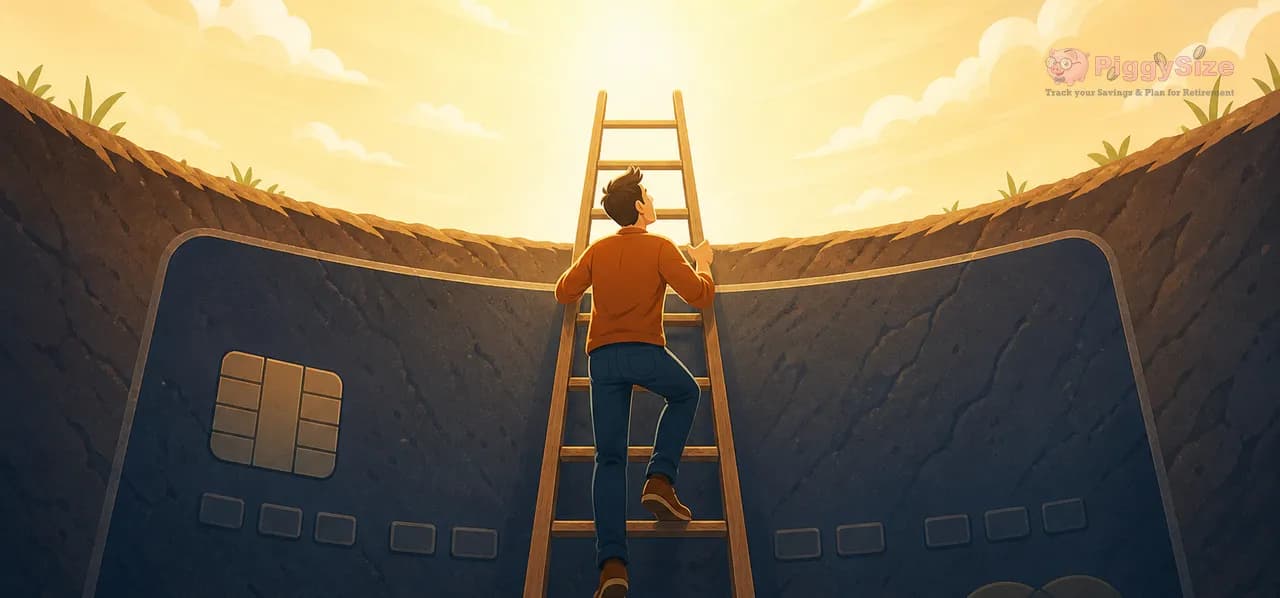
Getting out of credit card debt comes down to four moves: stop adding new charges, know exactly what you owe, lower the interest rate working against you where possible, and follow a payoff method until every balance is gone. None of these steps require earning more money — they're about redirecting what you already have and reducing how much of it goes to interest.
- Stop the bleeding first — new charges on a card you're trying to pay off just undo your progress.
- List every balance, rate, and minimum in one place before deciding on a plan.
- Lowering your rate (via a balance transfer, negotiation, or consolidation) can meaningfully shrink how much of every payment goes to interest instead of principal.
- Pick one payoff method (avalanche or snowball) and stick with it rather than randomly paying down whatever balance feels most urgent that month.
- A written budget that accounts for every dollar makes it possible to find consistent extra payment money.
Step 1: Stop new charges from piling on
- Switch to debit or cash for everyday spending while you pay down cards — this removes the temptation to "reset" progress.
- Leave cards at home or freeze physical access if you know impulse spending is a risk.
- Cancel or pause recurring subscriptions billed to the card you're targeting, so nothing new lands on it automatically.
- Build a tiny buffer for true emergencies (see below) so a flat tire doesn't become a new charge on the card you're trying to close out.
Watch out
Paying down a card while still charging new purchases to it is the single most common reason payoff plans stall. The math only works if the balance moves in one direction: down.
Step 2: Know exactly what you owe
List every card with:
- Current balance
- Interest rate (APR)
- Minimum payment
- Due date
This single list is what makes every later step possible — you can't choose a payoff order, evaluate a balance transfer, or negotiate a rate without knowing exactly where you stand.
Step 3: Choose a payoff method
The two standard approaches:
- Avalanche — pay minimums on everything, put extra money toward the highest-rate card first. Minimizes total interest paid.
- Snowball — pay minimums on everything, put extra money toward the smallest balance first. Builds momentum through quick wins.
Tip
If you've started and stopped a payoff plan before, the snowball's early wins are often worth more than the avalanche's slightly better math. If you're motivated by numbers and have the discipline to wait for results, avalanche saves more in the long run.
Step 4: Lower the interest rate working against you
This step is often skipped, but it can make every dollar of your payoff plan go further.
Balance transfers
- Move high-rate balances to a card offering a promotional low or 0% rate for a limited time.
- Watch for a balance transfer fee, usually a percentage of the amount moved, charged upfront.
- Compare the fee against the interest you'll save during the promotional period — a large balance moved well before that period ends usually wins.
- Have a plan to pay off (or most of) the transferred balance before the promotional rate expires, or it can revert to a standard rate that erases the benefit.
Negotiating directly with your issuer
- Call the number on the back of the card and ask about a lower rate or a hardship program, especially if you've been a reliable payer or have a competing offer from another issuer.
- Issuers aren't required to say yes, but a brief, polite request costs nothing to try.
- Ask specifically about any temporary hardship interest reduction if you're facing a job loss or income disruption — many issuers have formal programs for this that aren't advertised.
Debt consolidation loans
- A fixed-rate installment loan can replace several card balances with one predictable payment, often at a lower rate than your cards if your credit is solid.
- This trades revolving, variable-rate debt for a fixed schedule with a defined end date, which some people find easier to stick to.
Step 5: Automate the plan and track it
- Automate at least the minimum payments on every card so nothing is missed.
- Automate the extra payment toward your target debt, even a small fixed amount, so progress doesn't depend on remembering each month.
- Revisit the list monthly — as balances shift and promotional periods approach their end, the "right" target debt can change.
Nuance and common mistakes
- Closing cards too aggressively. Closing a paid-off card can reduce your total available credit and shorten your average account age — both factors in credit scoring. Many people keep a zero-balance card open rather than closing it.
- Chasing 0% offers you can't realistically pay off in time. A balance transfer only helps if the underlying balance is actually paid down before the promotional rate ends; otherwise the fee was paid for nothing.
- Treating a debt management plan and a debt settlement program as the same thing. A management plan (often through a nonprofit credit counseling agency) typically pays balances in full at a reduced rate; a settlement program negotiates paying less than the full balance, which can carry credit and tax consequences and is a materially different, higher-risk path.
- Ignoring a rising minimum payment. As a balance shrinks, some card issuers adjust the minimum down too — don't let a shrinking required minimum tempt you into reducing your actual payment; keep paying the higher, planned amount.
- Forgetting non-card debt in the plan. If a personal loan or other debt carries a similarly high rate, it deserves a place in the same avalanche or snowball order, not separate treatment.
A worked example
Suppose you carry two cards: Card A at $2,000 with a 26% APR and a $60 minimum, and Card B at $5,000 with a 22% APR and a $140 minimum. You free up $150 a month by pausing a subscription and switching to debit for groceries.
Using avalanche, Card A's higher rate makes it the first target: pay the $140 minimum on Card B, and put the $60 minimum plus the $150 extra — $210 total — toward Card A. At that pace, Card A (starting at $2,000) clears in roughly ten months, factoring in interest. Once it's gone, redirect that entire $210 onto Card B's $140 minimum, for $350 a month — clearing the remaining balance considerably faster than making minimum payments alone, which at 22% could otherwise take years and cost far more in interest.
FAQ
Will closing a paid-off credit card hurt my credit?
It can, since closing a card reduces your total available credit and can shorten your average account age, both of which factor into credit scoring. Many people keep a paid-off card open with no balance rather than closing it.
Is a balance transfer worth the fee?
It depends on the math: compare the transfer fee (commonly a percentage of the balance moved) to the interest you'd save during the promotional low-rate period. A large balance moved well before the promotional period ends usually saves the most.
Can I negotiate a lower interest rate with my card issuer?
Sometimes. Issuers aren't obligated to lower your rate, but a brief call — especially if you have a solid payment history or a competing offer — occasionally results in a temporary or permanent reduction.
What's the difference between a balance transfer and a debt consolidation loan?
A balance transfer moves card debt onto another card, usually at a promotional rate for a limited time. A consolidation loan replaces multiple debts with one fixed-rate installment loan, typically with a longer, more predictable payoff timeline.
Should I use a debt management plan through a credit counseling agency?
It can help some people, particularly those with multiple high-rate cards and difficulty negotiating alone, since agencies sometimes secure reduced rates in exchange for closing the accounts. It's worth researching reputable nonprofit agencies before committing.
Related reading

Debt avalanche vs snowball: which pays off debt faster?
The avalanche method saves the most money by targeting high-interest debt first; the snowball method builds momentum by clearing small balances first. Here's the real math behind both.
How does debt consolidation work — and is it worth it?
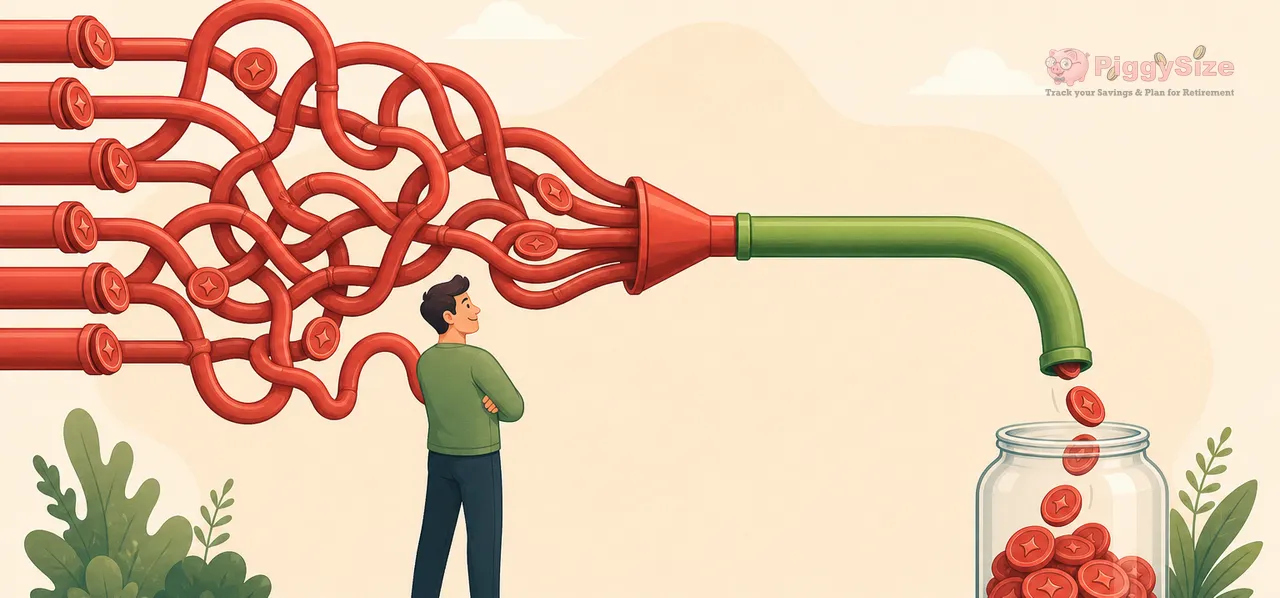
Debt consolidation combines multiple debts into one, usually at a lower rate — through a personal loan, a balance transfer, or a HELOC. It can genuinely help, or quietly make things worse.

Should you pay off debt or save first?
The short answer: build a small starter emergency fund first, then compare your debt's interest rate to what savings or investing could realistically earn. Here's the order most planners suggest.
PiggySize is a planning tool, not a financial advisor. This article is educational — projections and examples are estimates, not financial, tax, or investment advice.